Sunday, August 23, 2015

Matrimony Month: Muriel’s Wedding: Sisterhood in the ‘90’s Romance Oeuvre


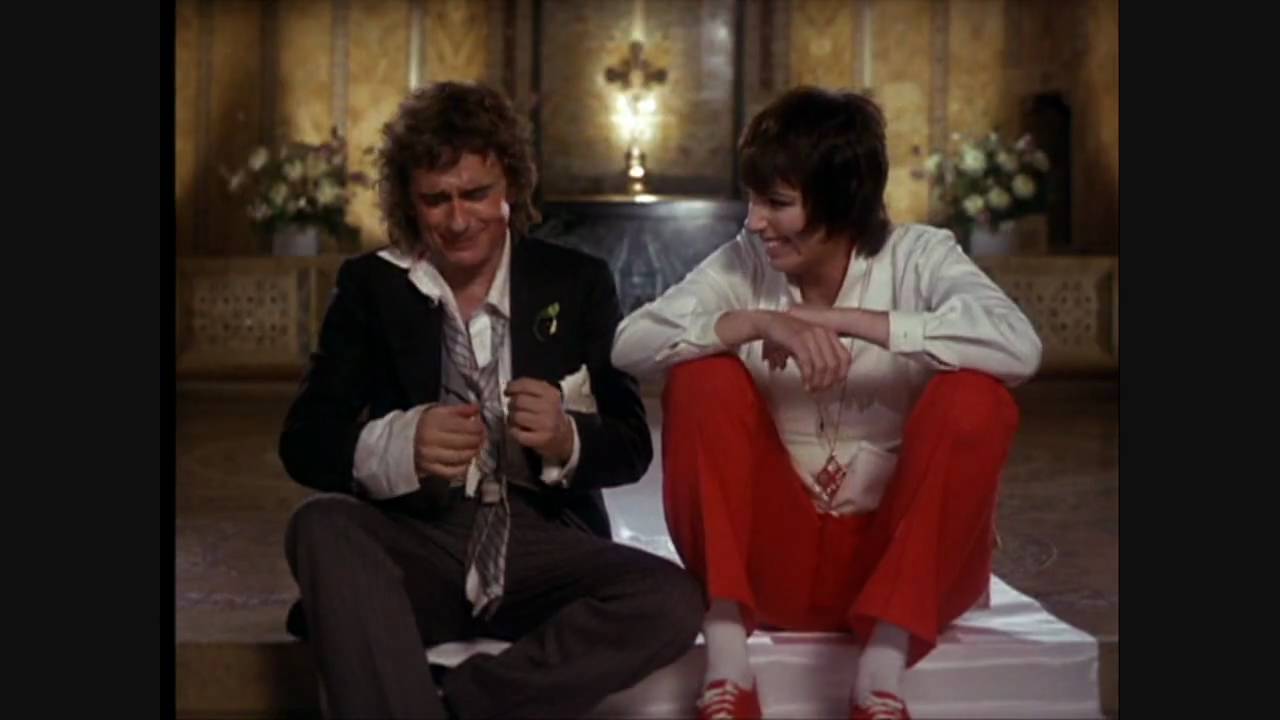
The flipside of the traditional values renaissance brought to life by movies like My Big Fat Greek Wedding was the anti-traditionalism brought to life by movies as diverse as the critically reviled The Next Best Thing and the critically acclaimed Muriel’s Wedding.


Sunday, August 16, 2015

Matrimony Month(s): My Big Fat Greek Wedding and the Resurgence of "Traditional" Cinematic Romance


The 90s brought about something of a sea change in romantic movies.  Pretty Women led the charge, and Cindarella – sometimes with a fresh coat of feminist paint as in “Ever After – emerged as a fresh role model.  If the 80s were all about individualism, then the 90’s brought about a resurgence of traditional romance, with My Big Fat Greek Wedding leading the charge.

My Big Fat Greek Wedding is as traditional a movie marriage plot can get and yet it is ostensibly about rejecting tradition…at least at first.  Toula is a lonely spinster stuck working at her parent’s Greek restaurant.  She falls for a regular customer, but her true motivation is independence – from her parent’s traditional values, from the pressure of marrying a Greek boy, from the expectation that she’ll be working at the family diner all her life.  Toula breaks free, taking classes, cutting her hair, and marrying a WASPy teacher…and marries him in a traditional Greek ceremony for which her fiancé has to convert.  

Saturday, August 1, 2015

Matrimony Month: Arthur, Coming To America and Overboard: Identity Porn in 80s Romance


The dawn of the 80s meant something new and fresh was in the air.  Marriage and romance had to be treated differently; we lived in a world where women had joined the workforce, where girls were told that they could be anyone, do anything, as they were raised.  This resulted in comedies about divorced people finding themselves; movies about second chances and balancing career and romance.  The schism between Mr. Mom and Heartburn is endemic of the decade they belonged to; everyone was suffering from growing pains, and everyone was trying to figure out how to adjust to the new international moral code.

Is it surprising that the pursuit of love turned away from marriage and toward different aspects of love?  The foreboding inherent in divorce dramas like Kramer vs Kramer gave way to a wave of fluffy teen romances like Pretty in Pink and Valley Girl, to soft romantic fantasy like Splash and Mannequin, and to complicated romantic and erotic psychodramas like 9 ½ Weeks and Wild Orchid.

Is it any wonder that the more marital-minded romances of the 80s had something of an identity crises going on and that the question ‘for love or money?’ could not have been asked more loudly during the Gordon Gecko years?

Sunday, July 26, 2015

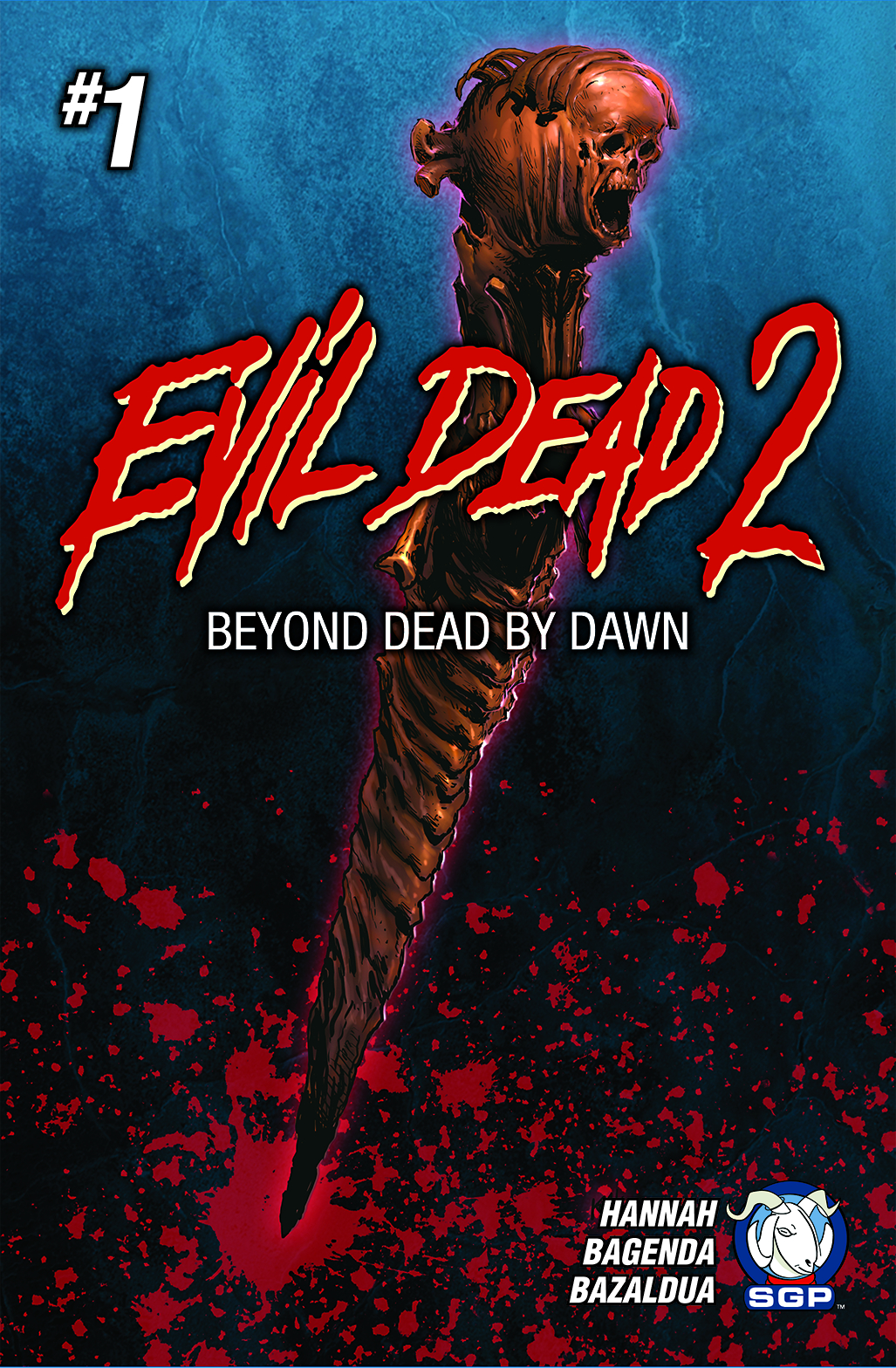
REVIEW: Evil Dead 2: Beyond Dead By Dawn #1 and Vampirella/AOD #1

Two weeks ago, Space Goat Productions finally released the first part of its licensed Evil Dead 2 comic, and the result was magical. 


Painted in cool blue tones and popping reds by Chris Summers (and drawn in a refreshingly non-sexualized manner by Barnaby Bagenda and Oscar Bazaldua), the comic takes a right fork from Annie Knowby’s fate at the end of Evil Dead 2.  Surviving her stabbing-by-magic-dagger-and-severed-hand, Annie and the rest of the cabin fall together through the earth and into hell, and that’s where the fun begins.

Matrimony Month: The 70s, Barbara Streisand and the resurrection of the weeper


Love Story seemed to open up the romantic floodgates for the Me generation; even when they were sarcastically declaiming love in movies like Heartburn, they were by now more often than not also supporting films like “Somewhere in Time”, a time-travel drama featuring Jane Seymour and Christopher Reeve, and watching movies like The Thorn Birds on tv.  In short, they had begun tumbling into the bourgeois trap they swore they’d avoid years ago en masses.  Though many would go on to divorce multiple times, they seemed to realize that romance was an inescapable steamroller – they might as well embrace it.

Monday, July 20, 2015

Matrimony Month: Love Means Never Having to Say You’re Sorry to Missus Robinson: The Graduate, Love Story, and how the 60’s Generation Inadvertently Slew Romantic Sarcasm by the Dawn of the 70s


The sixties meant change.  Change in the bedroom, the boardroom, the streetcorner and of course your local movie theatre.  With the code breaking and independent zeitgeist films breaking through into the mainstream and winning money and Oscars, every genre was transformed.  There were outsider comedies, dramas….and, of course, romantic pictures.

This new generation of lovers-to-be had about a million different points of view on love.  The first reaction was cynicism; falling in love was something squares did, a symptom of a bourgeois society, and the antithesis of free love.  Novels like The Harrad Experiment demanded open relationships and free love, while other movies – like the 1967 proto-slacker dramady The Graduate – mocked the idea of love, peace and those old wedding bells as the solution to everything.   This is a decade that had Dr. Zhivago, Easy Rider and The Graduate all released within ten turbulent years; that’s a lot of different ways to look at love.

Matrimony Month: The Quiet Man: Or Everyone Loves John Wayne, So Why Don’t You?

The Wayne/O'Hara gestalt in a nutshell


Last week I discussed the way marriage was handled in several movie made by that archetype of Fifties glamour, Marilyn Monroe. This week, I thought I’d take a look at one specific film in the canon of another archetype of 50s Hollywood: John Wayne. 

Wayne basically sculpted the tough man/cowboy archetype during his time in the spotlight; in many of his movies he does indeed get the girl, though in iconic pieces such as “The Searchers” and “True Grit”, all he has is his integrity.  Perhaps that’s why when we look back on “The Quiet Man” and “McClintock!” his two most explicitly marriage – minded movies, one is struck by the breathtaking scenery and the jaw-grinding misogyny all at once.   Being romanced by a square-jawed hero in a pristine Irish landscape is a fine enough fantasy to have, but when you have to enter into a nonstop battle of the sexes to get respect from your own husband the price feels mighty high.